
Crypto Wallet AML and Risk Scanner
Analyse a blockchain address for potential AML risks, suspicious transaction exposure
and other indicators that may require further investigation.
Safescan helps Web3 users, projects and compliance teams assess blockchain
addresses before interacting with them.
Analyse the Risk Profile of a Blockchain
Address
Blockchain transactions are public, but assessing the risk connected to a wallet address can still require detailed investigation.
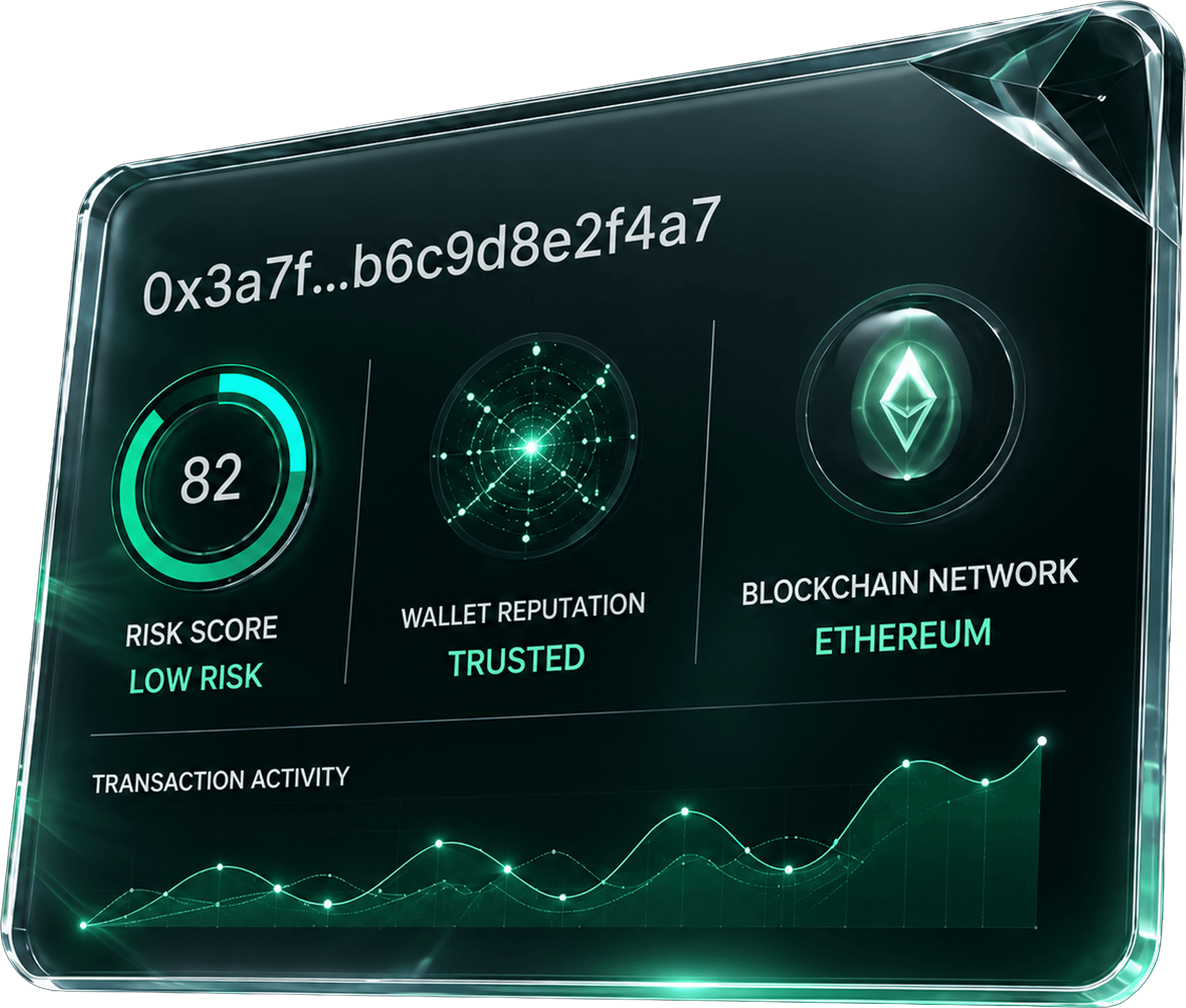
Safescan analyses a submitted blockchain address to identify AML and KYC-related risk indicators. It can help users gather additional context about an address, investigate potentially suspicious activity and make more informed decisions before sending funds or interacting with a wallet.
Safescan should be used as a due diligence and risk-screening tool. Its results do not constitute legal advice, regulatory approval or a final determination that an address is involved in illegal activity.
How It Works
Check a Crypto Address in Three Steps

Enter a Blockchain Address
Select the relevant blockchain network and enter the wallet or smart contract address you want to investigate.

Run the Address Analysis
Safescan analyses the address and reviews available blockchain activity for potential AML, KYC and transaction-risk indicators.

Review the Results
Examine the available risk information and use the findings as part of your broader due diligence or compliance process.
What Can Safescan Help You Analyse?
Address Risk Indicators
Review available signals that may indicate whether a blockchain address requires additional investigation.
Transaction Context
Gain greater visibility into the activity connected to a wallet address and assess whether further checks may be necessary.
AML Screening Support
Use blockchain address analysis as an additional component of internal AML and compliance procedures.
Suspicious Transaction Exposure
Identify potential exposure to addresses or transaction patterns associated with elevated risk.
Wallet Due Diligence
Gather additional information before sending funds, accepting payments or interacting with an unfamiliar address.
Why Check a Crypto Wallet Address?
Reduce Transaction Risk
Investigate unfamiliar wallet addresses before transferring digital assets or approving blockchain interactions.
Support Compliance Reviews
Add blockchain address screening to internal AML, KYC and risk-management workflows.
Investigate Suspicious Activity
Use address-level information to support security research and transaction investigations.
Protect Your Project
Screen addresses interacting with your platform, protocol or Web3 ecosystem.
Make More Informed Decisions
Use available blockchain data and risk indicators to decide whether an address requires additional due diligence.
Safescan
Who Is Safescan For?
Web3 Projects
Screen wallet addresses interacting with a protocol, token, platform or decentralised application.
Crypto Businesses
Support internal AML, KYC and transaction-monitoring procedures with blockchain address analysis.
Security Researchers
Investigate suspicious wallets, transaction patterns and potentially related blockchain activity.
Investors and Traders
Review unfamiliar wallet addresses before transferring assets or entering into transactions.
Compliance Teams
Use wallet screening as one part of a broader risk assessment and due diligence process.
Individual Crypto Users
Check an address before sending funds or interacting with an unknown wallet.
AML and KYC Analysis for Blockchain
Transactions
Anti-Money Laundering procedures are designed to help organisations identify, assess and manage financial crime risks. Know Your Customer procedures focus on verifying the identity and risk profile of customers or business relationships.
Blockchain address analysis can support these processes by providing additional information about wallet activity and transaction exposure. However, an address scan alone cannot verify the identity of the individual or organisation controlling a wallet.
Safescan should therefore be used alongside appropriate identity verification, transaction monitoring and compliance procedures.
Understand the Results Before Taking Action
A blockchain address may interact directly or indirectly with many other addresses. Exposure to a potentially risky address does not automatically prove that the wallet
owner has participated in illegal activity.
Safescan results should be treated as risk indicators requiring interpretation and, where appropriate, further investigation.
The tool does not:
- Confirm the identity of a wallet owner
- Prove that an address is involved in criminal activity
- Provide legal or regulatory advice
- Guarantee that an address is safe
- Replace a complete AML, KYC or compliance programme
Check a Blockchain Address Before You
Interact
Analyse wallet activity, review AML and KYC-related risk indicators and gain additional context before sending funds or interacting with an unfamiliar
address.
Run an address risk check and review the available findings in minutes.
Frequently Asked Questions
A crypto wallet AML checker analyses a blockchain address for available risk indicators, suspicious transaction exposure and activity that may require further investigation as part of an AML or compliance review.
Investigate Before You Interact
Check a blockchain address for potential AML, KYC and transaction-risk indicators
before sending funds or interacting with an unfamiliar wallet.
Analyse the address and review the available risk findings with Safescan.