
Signaturescan
Ethereum Function Signature and Method
Selector Lookup
Search for function, event and error signatures stored in the Cyberscope Ethereum Signature Database.
Enter a human-readable Solidity declaration or a hexadecimal signature to identify the corresponding smart contract method.
Use Signaturescan to decode function selectors, identify unknown smart contract calls and discover contracts containing
matching signatures.
Explore the Cyberscope
Ethereum Signature Database
2,000,000+
Function
Signatures
80,000+
Error
Signatures
30,000+
Aalysed
Contracts
200,000+
Event
Signatures
Decode Unknown Smart Contract Signatures
Smart contract transactions often display encoded method selectors rather than human-readable function names.
For example, a transaction involving the selector:
0xa9059cbb
may not immediately reveal which function is being called. Signaturescan searches the Cyberscope Ethereum Signature Database and identifies the corresponding declaration:
transfer(address,uint256)
This allows developers, security researchers and blockchain investigators to understand smart contract interactions more quickly, including transactions involving unverified contracts.
Search in Either Direction
Signature Hash to Method Name
Enter a hexadecimal function selector, event topic or error signature to find potential matching Solidity declarations.
Example:
0xa9059cbb
Result:
transfer(address,uint256)
Method Name to Signature Hash
Enter a Solidity function, event or error declaration to identify its corresponding Keccak-256 signature.
Example:
transfer(address,uint256)
Result:
0xa9059cbb
Find Contracts Containing the Signature
Review available smart contracts in the database that contain the identified function, event or error declaration
Identify Unknown Methods in
Suspicious Transactions
Unusual Transaction
During a blockchain investigation, an analyst may encounter a transaction initiated by an unverified smart contract.
Because the source code is not publicly verified, the transaction may display only an encoded method selector such as:
0xa9059cbb
The selector alone does not clearly explain what action the contract is attempting to perform.
Signature Search
The investigator can enter the selector into Signaturescan. The database searches for matching declarations and reveals that:
0xa9059cbb
corresponds to:
transfer(address,uint256)
The investigator can then review contracts containing the same function signature and use the information as additional context during the investigation.
How It Works
How Signaturescan Builds Its Signature Database
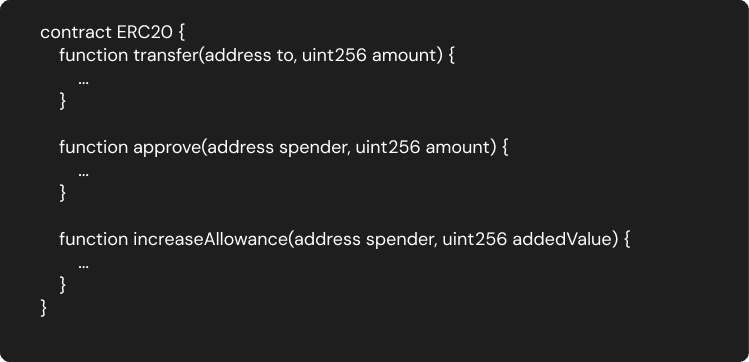
1. Blockchain Code Collection
Signaturescan collects available verified smart contract source code from supported blockchain networks.
The system processes contract code containing declarations such as:
2. Declaration Extraction
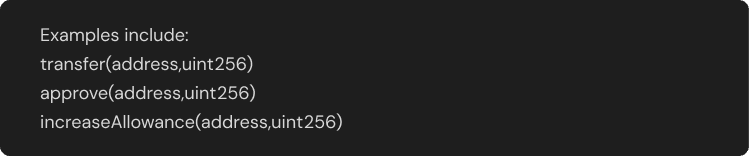
Function, event and custom error declarations are extracted from the contract source code.
3. Keccak-256 Hash Generation
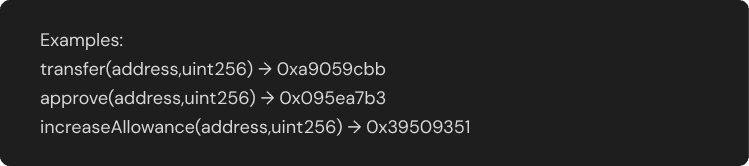
Each canonical declaration is encoded using the Keccak-256 hashing algorithm.
For function calls, the first four bytes of the generated hash form the method selector.
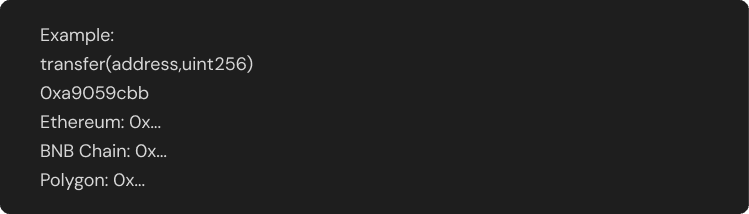
4. Signature Database Storage
The relationship between the declaration, its signature and relevant smart contracts is stored in the Cyberscope Ethereum Signature Database.
Users can search the database using either the human-readable declaration or its hexadecimal signature.
What Is a Smart Contract Method Signature?
A method signature is the canonical representation of a Solidity function name and its parameter types.
For example:
transfer(address,uint256)
The parameter names are not included in the signature. Only the function name and ordered parameter types are used.
The declaration:
function transfer(address recipient, uint256 amount)
therefore becomes:
transfer(address,uint256)
The canonical signature is hashed using Keccak-256. The first four bytes of the resulting hash form the function selector:
keccak256("transfer(address,uint256)")
Result:
0xa9059cbb
This selector is included in transaction calldata so that the smart contract knows which function to execute.
What Types of Signatures Can You Search?
Function Signatures
Function signatures identify executable smart contract methods.
Example declaration:
approve(address,uint256)
Function selector:
0x095ea7b3
Function selectors use the first four bytes of the Keccak-256 hash.
Event Signatures
Event signatures identify events emitted by smart contracts and recorded in transaction logs.
Example declaration:
Transfer(address,address,uint256)
Events use the complete Keccak-256 hash as the primary event topic.
Custom Error Signatures
Custom errors allow Solidity contracts to return structured error information while using less gas than traditional revert strings.
Example declaration:
InsufficientBalance(uint256,uint256)
Custom errors are also identified through selectors derived from their Keccak-256 hashes.
Main Features
What Can Signaturescan Help You Do?
Decode Function Selectors
Convert hexadecimal method selectors into readable Solidity function declarations.
Generate Signature Hashes
Search a function, event or error declaration to identify its corresponding signature.
Investigate Unverified Contracts
Understand which methods may be called even when the smart contract source code is not publicly verified.
Analyse Transaction Calldata
Identify the likely function represented by the first four bytes of transaction input data.
Search Events and Errors
Look up signatures associated with emitted events and Solidity custom errors.
Discover Related Contracts
View available contracts containing the same function, event or error signature.
Support Security Research
Add human-readable context to suspicious transactions, unknown contracts and blockchain activity.
Why Use Signaturescan?
Understand Encoded Transactions
Translate hexadecimal selectors into readable smart contract methods.
Improve Transaction Monitoring
Add method-level context to blockchain monitoring and security workflows.
Accelerate Investigations
Reduce the time required to identify unknown functions during transaction and contract analysis.
Research Smart Contract Behaviour
Identify common functions, events and errors across multiple smart contracts and networks.
Analyse Unverified Contracts
Gather additional information when source code and method names are unavailable on a block explorer.
Verify Solidity Declarations
Check the signature associated with a function before building or reviewing an integration.
Who Is Signaturescan For?

Smart Contract Developers
Verify function selectors and event signatures while building, testing or integrating Solidity contracts.

Web3 Projects
Review smart contract calls and investigate interactions with protocols, tokens or external applications.

Security Researchers
Decode unknown transaction methods and investigate potentially malicious contract interactions.

Blockchain Investigators
Identify the methods used in suspicious or unusual transactions involving unverified contracts.

Compliance and Monitoring Teams
Add readable method information to blockchain transaction-monitoring workflows.

Crypto Users
Understand the function represented by a transaction selector before interacting with an unfamiliar contract.
Interpret Signature Matches Carefully
A hexadecimal selector may occasionally correspond to more than one possible function declaration because selectors contain only the first four bytes of a Keccak-256 hash.

This is known as a selector collision.
A matching result therefore does not always prove which function exists inside an unverified contract. Users should review additional information such as:
- Transaction call data
- Parameter structure
- Contract bytecode
- Verified contract implementations
- Transaction behaviour
- Related addresses and contracts
Signaturescan provides useful investigative context, but it does not confirm that a contract is safe or that a specific interpretation is definitive.
Decode Smart Contract Activity in Seconds
Search millions of function, event and error signatures to identify unknown smart contract methods and better understand blockchain transactions.
Search using a Solidity declaration or hexadecimal signature.
Frequently Asked Questions
Signaturescan is a smart contract signature search tool that allows users to search for function, event and error signatures stored in the Cyberscope Ethereum Signature Database.
Search the Signature Database
Decode unknown function selectors, identify event and error signatures and investigate smart contract activity with Signaturescan.
Enter a method declaration or hexadecimal signature to begin your search.