

How to Check if a Smart Contract Is Safe

CyberScope
May 21, 2026
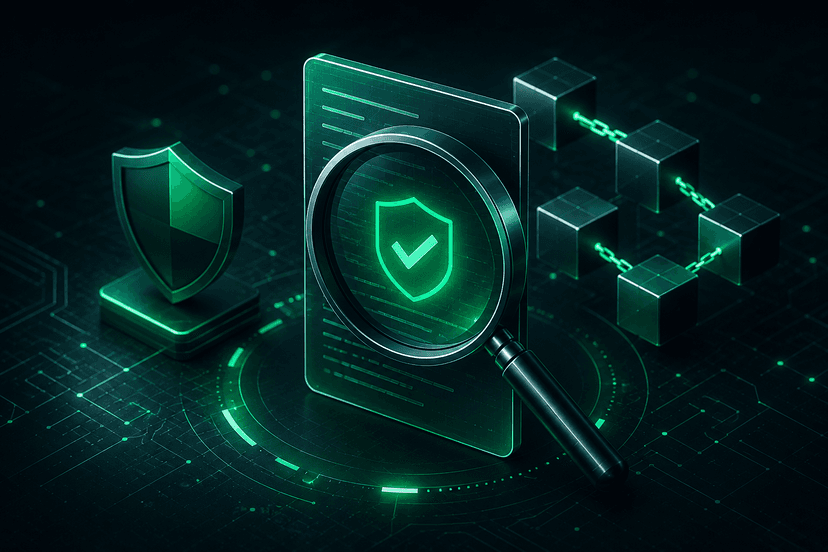
How to Check if a Smart Contract Is Safe
Smart contracts have become one of the foundations of the Web3 ecosystem. They power decentralized exchanges, NFT marketplaces, lending protocols, staking platforms, meme coins, launchpads, and thousands of other blockchain applications. Every time users swap tokens, mint NFTs, bridge assets, or interact with a decentralized application, they are usually interacting with one or more smart contracts.
Why Smart Contract Security Matters
Despite their innovation, smart contracts also introduce significant security risks. Once deployed on a blockchain such as Ethereum, smart contracts are often immutable. This means that bugs, vulnerabilities, or malicious functions can remain permanently embedded inside the code. A single exploit can result in millions of dollars being lost within minutes.
Over the last few years, the crypto industry has seen countless hacks, rug pulls, phishing schemes, and malicious token launches. Many of these incidents could have been avoided if users, investors, or project teams had properly analyzed the safety of the underlying smart contract before interacting with it.
Learning how to check whether a smart contract is safe is no longer something reserved only for developers or blockchain auditors. Investors, traders, founders, and even casual crypto users should understand the basics of smart contract security. While advanced audits require deep technical expertise, there are still many practical ways to evaluate whether a contract may be trustworthy or potentially dangerous.
This article explains how to check if a smart contract is safe, what red flags to look for, and how AI-powered tools such as Cyberscan AI can help users identify risks faster.

What Is a Smart Contract?
A smart contract is a self-executing program stored on a blockchain. It automatically performs actions when specific conditions are met. Unlike traditional applications that run on centralized servers, smart contracts operate on decentralized networks. For example, a token smart contract may control how tokens are transferred between wallets. A decentralized finance protocol may use smart contracts to manage lending and borrowing. NFT collections use contracts to mint and transfer ownership of digital assets. The problem is that smart contracts are only as secure as the code written by developers. If the code contains vulnerabilities or malicious logic, attackers can exploit it or project owners can abuse it.
This is why smart contract security has become one of the most important areas within blockchain and Web3.
Why Unsafe Smart Contracts Are Dangerous
Unsafe smart contracts can lead to catastrophic financial losses. In some cases, hackers exploit vulnerabilities to drain liquidity pools or steal user funds. In other cases, malicious developers intentionally create deceptive contracts designed to scam investors. Some unsafe contracts contain hidden owner permissions that allow developers to pause trading, mint unlimited tokens, blacklist wallets, or modify transaction fees after launch. Others may include logic that prevents investors from selling their tokens, commonly known as honeypot scams. Even projects with good intentions can accidentally deploy insecure contracts due to coding mistakes or poor testing practices. The decentralized nature of blockchain means transactions are usually irreversible. Once funds are stolen, recovering them is often impossible. This is why checking the safety of a smart contract before investing or interacting with it is extremely important.
Start by Verifying the Contract Address
The first step when checking a smart contract is verifying the contract address itself.
Scammers frequently create fake tokens that imitate legitimate projects. They often use similar names, logos, and social media branding to confuse users. A fake token may appear identical to a real project while actually pointing to a completely different contract. Always verify the contract address directly from official project sources such as the project website, official Telegram, Discord, X account, or CoinMarketCap listing. Never trust random contract addresses shared in comments, private messages, or unofficial groups.
Once you have the contract address, you can inspect it on blockchain explorers such as Etherscan or similar explorers for other blockchains.
Check Whether the Contract Is Verified
A verified contract means the source code has been publicly published and matched against the deployed smart contract bytecode. This is one of the most important signals when evaluating safety. If a contract is unverified, users cannot easily inspect the code or understand what functions the contract contains. This creates a major transparency issue.
Verified contracts allow developers, auditors, AI security tools, and the broader community to analyze the logic behind the project.
Although verification alone does not guarantee safety, an unverified contract should immediately raise concerns.
Legitimate projects usually prioritize transparency and verification because it helps build trust with investors and users.
Review the Ownership Structure
One of the most important areas to analyze is contract ownership. Many smart contracts contain privileged functions controlled by the owner wallet. These permissions can sometimes be abused.
You should check whether the owner can mint new tokens, change fees, pause transfers, blacklist users, or upgrade the contract. If a single wallet has excessive control over the project, this increases centralization and security risks.
In some cases, developers renounce ownership after deployment. Ownership renouncement removes certain administrative privileges and can reduce the risk of malicious intervention. However, ownership renouncement alone is not enough to guarantee safety because malicious functions may still exist within the code.
It is also important to understand whether the project uses multi-signature wallets. Multi-signature systems generally provide stronger security because multiple approvals are required before sensitive actions can be executed.
Analyze Token Distribution
Token distribution can reveal significant information about project risk. If a small number of wallets hold most of the supply, the project may face manipulation risks. Large holders, often called whales, can heavily impact price movements by selling large amounts of tokens. You should check whether liquidity is concentrated in only a few wallets or whether developers control a large percentage of the supply.
Blockchain explorers and analytics platforms allow users to inspect holder distribution and wallet concentration. A healthy token distribution usually shows broader ownership across multiple wallets instead of extreme concentration. Projects where developers secretly control most of the supply should be approached with caution.
Check Liquidity Locks
Liquidity is another critical factor when evaluating smart contract safety. In decentralized exchanges, liquidity pools enable users to buy and sell tokens. If developers control the liquidity and can remove it at any time, investors risk becoming victims of a rug pull. A rug pull occurs when developers suddenly withdraw liquidity, causing the token price to collapse and leaving investors unable to sell.
Projects that lock liquidity for a defined period generally provide greater confidence because it limits the ability of developers to suddenly remove funds.
Users should verify whether liquidity is locked, for how long, and through which platform. Unlocked liquidity does not automatically mean a project is malicious, but it significantly increases risk.
Look for Smart Contract Audits
Professional smart contract audits are one of the strongest indicators of project credibility. Audits involve security experts reviewing the smart contract code to identify vulnerabilities, weaknesses, or malicious logic. An audit does not guarantee perfect security, but audited projects generally demonstrate stronger commitment to safety and transparency. When reviewing an audit, users should check which company performed the audit, whether vulnerabilities were fixed, and whether the report is publicly available.
The reputation of the auditing company also matters. Trusted Web3 security firms usually follow established review methodologies and provide detailed findings.
It is important to remember that some scam projects publish fake or low-quality audits. Always verify audit authenticity through the official auditor website.
Understand Common Smart Contract Vulnerabilities
Even non-technical users should familiarize themselves with common smart contract vulnerabilities.
Reentrancy attacks are among the most famous smart contract exploits. These occur when attackers repeatedly call vulnerable functions before the contract updates its internal balance.
Integer overflow and underflow vulnerabilities involve mathematical calculation errors that can lead to unexpected token creation or balance manipulation. Access control vulnerabilities happen when unauthorized users can access privileged functions.
Flash loan attacks exploit weaknesses in DeFi protocols using massive temporary loans.
Oracle manipulation attacks target projects that rely on external price feeds.
Honeypot mechanisms prevent users from selling tokens after purchasing them.
Learning the basics of these vulnerabilities helps users recognize dangerous projects more effectively.
Use AI-Powered Smart Contract Analysis
Artificial intelligence is becoming increasingly important in blockchain security. Traditional smart contract auditing can take days or weeks depending on complexity. AI-powered analysis tools help automate parts of the review process and identify suspicious patterns much faster.
AI-driven security solutions are especially valuable for growing Web3 projects, enterprise blockchain applications, and development teams that require fast and scalable risk assessment alongside traditional security reviews.
By combining automation with blockchain security expertise, AI-powered scanners help developers, investors, and ecosystems make faster and more informed decisions.
As Web3 continues to evolve, AI is expected to play a major role in improving smart contract security and reducing exposure to scams and exploits.
Examine Transaction Activity
Transaction activity can reveal useful information about project legitimacy. A healthy project usually shows organic wallet interactions and realistic trading activity. Sudden spikes in trading volume, repetitive bot transactions, or suspicious wallet patterns may indicate manipulation. Users should also check whether liquidity appears genuine or artificially inflated.
Some scam tokens generate fake activity to create the illusion of popularity.
Blockchain explorers allow users to inspect transaction history, wallet interactions, and trading behavior in real time.
Projects with highly suspicious on-chain behavior deserve additional caution.
Evaluate the Development Team
Although crypto is decentralized, the credibility of the development team still matters. Anonymous teams are common in Web3, but anonymity naturally introduces higher risk because accountability becomes limited.
Users should evaluate whether the team has previous experience, public profiles, technical expertise, or a track record within the industry.
Projects with transparent communication, active development, and consistent updates generally inspire more confidence than projects with vague information and aggressive marketing.
It is also important to analyze community sentiment. Genuine communities tend to have realistic discussions, while scam projects often rely heavily on hype, spam, and unrealistic promises.
Be Careful with Unrealistic Promises
One of the biggest red flags in crypto is unrealistic marketing. Projects promising guaranteed returns, massive profits, or risk-free investments should always be approached carefully. Legitimate projects usually focus on technology, utility, ecosystem growth, and long-term development. Scam projects often focus primarily on price speculation and emotional marketing.
If a project spends more time promoting unrealistic gains than explaining its technology or security practices, users should remain cautious.
Why Manual Analysis Alone Is Not Always Enough
Manually reviewing smart contracts can be difficult, especially for non-developers. Even experienced developers may overlook vulnerabilities hidden within large or complex codebases. Modern smart contracts often contain thousands of lines of code, multiple dependencies, proxy patterns, and advanced tokenomics logic. This is why combining manual analysis, professional audits, and AI-powered tools is becoming increasingly important.
Security should never rely on a single method.
The strongest approach usually combines transparency, audits, AI analysis, liquidity verification, community research, and continuous monitoring.
The Growing Importance of Smart Contract Security
As blockchain adoption continues to grow, smart contract security is becoming more critical than ever. Billions of dollars are now locked inside decentralized finance protocols, NFT ecosystems, gaming platforms, and tokenized applications. At the same time, attackers are becoming more sophisticated.
The Web3 industry is gradually moving toward stronger security standards, better auditing practices, AI-powered analysis, and improved user education.
Projects that prioritize security are more likely to build long-term trust and sustainable ecosystems.
Users who learn how to evaluate smart contract safety will be better positioned to avoid scams, reduce risk, and navigate the crypto space more confidently.
Final Thoughts
Checking whether a smart contract is safe requires a combination of research, technical awareness, and critical thinking.
Users should verify the contract address, inspect ownership permissions, review liquidity conditions, analyze token distribution, check audits, and evaluate community credibility.
No single factor alone can guarantee security. Even audited projects can still experience vulnerabilities. However, combining multiple layers of analysis significantly reduces risk.
AI-powered platforms such as Cyberscan AI are also changing the way users approach blockchain security. By automating parts of the analysis process and identifying potential vulnerabilities quickly, AI tools help make smart contract security more accessible to both developers and investors.
As the crypto industry evolves, understanding smart contract safety will become an essential skill for anyone participating in Web3.
Recent Posts
Cryptocurrency Security Standard: What Is CCSS?
2 months ago
Blockchain and Web3 Incident Response
2 months ago