

What is an Injection Attack on the Blockchain?

CyberScope
Jul 25, 2024
An injection attack on the blockchain represents a significant threat to the integrity, security, and functionality of decentralized systems. Blockchains, renowned for their distributed ledger technology and inherent security features, are not immune to various forms of injection attacks. These attacks occur when an attacker inserts malicious data into a blockchain network, exploiting vulnerabilities in the way the network processes and validates data. This can lead to severe consequences, such as data corruption, unauthorized transactions, and even complete system compromise.
Importance of Blockchain Security
Blockchain technology is celebrated for its ability to provide transparency, immutability, and decentralization. It underpins critical applications in finance (cryptocurrencies), supply chain management, healthcare, and more. However, the increasing reliance on blockchain systems also amplifies the stakes involved in securing these networks. An injection attack can undermine the very principles that make blockchain attractive, such as trustlessness and resistance to tampering. Therefore, understanding and mitigating these risks is paramount for the continued adoption and evolution of blockchain technologies.
What is an Injection Attack?
Injection attacks are a broad category of attacks where an attacker injects malicious code into a system to alter its behavior. In the context of blockchain, these attacks typically target smart contracts, the self-executing contracts with the terms of the agreement directly written into code. Injection attacks on the blockchain can manifest in several ways, including SQL injection, script injection, and more specific forms like smart contract injection.
See Also: What is a Replay Attack in Blockchain?
Types of Injection Attacks in Blockchain
Injection attacks are a class of security vulnerabilities where attackers craft inputs that are processed unintendedly, causing the system to execute harmful actions. These attacks are well-documented in traditional software environments, particularly SQL injection and code injection attacks on web applications. In the context of blockchain, injection attacks can target smart contracts, nodes, or the infrastructure supporting the blockchain network.
- SQL Injection:
SQL injection is more common in blockchain applications that interface with traditional databases. An attacker exploits vulnerabilities in the application to inject malicious SQL code, potentially gaining unauthorized access to the database or altering its contents. While this is not a direct attack on the blockchain itself, it can affect the data integrity of blockchain applications.
- Script Injection:
This involves injecting malicious scripts into a blockchain application. For instance, an attacker might exploit a web-based blockchain wallet or dApp by inserting a script that could steal user information or private keys.
- Smart Contract Injection:
The most pertinent form of injection attack in the blockchain context involves smart contracts. An attacker exploits vulnerabilities in the smart contract code, injecting malicious functions or altering the intended behavior of the contract. This can lead to unauthorized transactions, loss of funds, or manipulation of the contract’s logic.
Learn more: Crypto Vulnerability Management Solutions: A Quick Guide

How Injection Attacks Work
Injection attacks typically exploit poor coding practices, inadequate input validation, or vulnerabilities within the application or smart contract. Here’s a simplified breakdown of how a smart contract injection attack might occur:
- Identification of Vulnerability: The attacker identifies a vulnerability in the smart contract code. This could be a function that doesn’t properly validate input or a flaw in the logic.
- Injection of Malicious Code: The attacker crafts malicious input designed to exploit the identified vulnerability. This input is injected into the contract during a transaction or interaction with the contract.
- Execution and Exploitation: The injected code is executed as part of the smart contract’s operations. This can result in unauthorized actions such as transferring funds, altering the state of the contract, or disrupting its normal operations.
Consequences of Injection Attacks
Injection attacks on the blockchain can have severe and far-reaching consequences. One of the primary impacts is data corruption. Malicious injections can corrupt blockchain data, undermining the integrity of transactions and disrupting the accuracy of the ledger. This corruption can lead to a loss of trust among users and invalidate the blockchain’s primary purpose of providing a reliable record of transactions.
Additionally, injection attacks can result in substantial financial losses. When smart contracts are altered or manipulated through injection, attackers can gain unauthorized access to funds, potentially draining accounts or redirecting assets to illicit destinations. This not only impacts individual users but can also damage the reputation and financial stability of blockchain projects. Finally, successful injection attacks have the potential to compromise the entire blockchain system.
If attackers exploit vulnerabilities in smart contracts or other critical components, they can cause widespread disruptions, leading to further security breaches and destabilizing the entire ecosystem. The cascading effects of such attacks underscore the importance of robust security measures and vigilant monitoring in maintaining the integrity and trustworthiness of blockchain systems.
Mitigation Strategies
Preventing injection attacks requires a multifaceted approach:
- Input Validation and Sanitization: Ensuring all inputs are properly validated and sanitized can prevent malicious data from being processed.
- Code Audits: Regularly auditing smart contract code and other critical components of the blockchain infrastructure helps identify and fix vulnerabilities before they can be exploited.
- Security Libraries and Frameworks: Utilizing established security libraries and frameworks can protect against common injection attacks.
- Access Controls: Implementing strict access controls and permissions limits the potential impact of an injection attack.
- Continuous Monitoring: Deploying monitoring tools to detect and respond to suspicious activities or anomalies in real-time enhances the ability to mitigate attacks promptly.
By comprehensively understanding the threats posed by injection attacks and implementing rigorous security measures, blockchain developers and operators can safeguard their systems against these potentially devastating exploits.
Injection Attacks vs. Presentation Attacks
Injection attacks and presentation attacks are two distinct types of security vulnerabilities. Injection attacks occur when an attacker inserts malicious data into a system, exploiting weaknesses in how the system processes inputs, such as through SQL injection or code injection in smart contracts. These attacks aim to execute unauthorized actions or disrupt operations.
In contrast, presentation attacks, also known as spoofing attacks, involve deceiving a system's authentication mechanisms by presenting false data, like fake biometric information or phishing attempts to capture credentials. While injection attacks compromise system integrity, presentation attacks focus on bypassing security measures to gain unauthorized access.
Advanced Protection Measures
- Cryptographic Signatures: Use cryptographic signatures to ensure data integrity. For example, Apple and Android devices use cryptographic signatures to establish a chain of trust between the device, its OS, and apps, making it extremely difficult to spoof data.
- Mobile Device Security: Leverage the security and cryptography of modern smartphones. Verification flows that pivot to mobile devices can utilize the device's camera and sensors, ensuring the data comes from the user's actual device.
- Eliminate Threat Vectors: By using mobile app security and cryptography, platforms like Nametag eliminate the threat vectors, making injection attacks significantly harder to execute.
Quick Link: Know Your Transaction (KYT): A Complete Guide
Conclusion
Injection attacks on the blockchain pose a significant threat to the security and integrity of decentralized systems. Understanding the various types of injection attacks, how they work, and the best practices to mitigate them is crucial for developers, users, and stakeholders in the blockchain ecosystem. By prioritizing security through careful coding, regular audits, and vigilant monitoring, the blockchain community can continue to harness the power of this transformative technology while minimizing risks.
Moreover, fostering a culture of continuous learning and awareness about security threats is vital. Developers should stay updated with the latest advancements in security practices and emerging threats. Encouraging collaboration within the blockchain community to share knowledge and resources can also strengthen the overall security posture. Implementing robust incident response strategies ensures that, in the event of an attack, measures are in place to quickly identify, contain, and remediate the threat, thereby minimizing damage.
As blockchain technology evolves, so will the sophistication of potential attacks. Therefore, ongoing research and innovation in security mechanisms are essential. By taking a proactive stance and continuously improving security measures, the blockchain ecosystem can maintain its resilience against injection attacks and other vulnerabilities, ensuring a safer and more reliable decentralized future.
FAQs
What are the examples of presentation attacks on blockchain systems?
- Phishing for Private Keys: Trick users into revealing their private keys.
- Replay Attacks: Reuse valid transaction data in a different context to deceive the network.
- Biometric Spoofing: Using fake biometric data to gain unauthorized access.
How can blockchain systems mitigate injection attacks
- Input Validation and Sanitization: Ensure all inputs are properly validated and sanitized.
- Code Audits and Reviews: Regularly audit code, especially smart contracts, for vulnerabilities.
- Use of Security Frameworks: Implement established security libraries and frameworks.
- Access Controls: Limit access to sensitive components and data.
Why is it important to address both injection and presentation attacks in blockchain?
Addressing both types of attacks is crucial to maintaining the security, integrity, and trustworthiness of blockchain systems. Injection attacks can compromise system operations and data integrity, while presentation attacks can lead to unauthorized access and identity theft. Implementing comprehensive security measures ensures the robustness and reliability of blockchain networks.
Recent Posts
Cryptocurrency Security Standard: What Is CCSS?
2 months ago
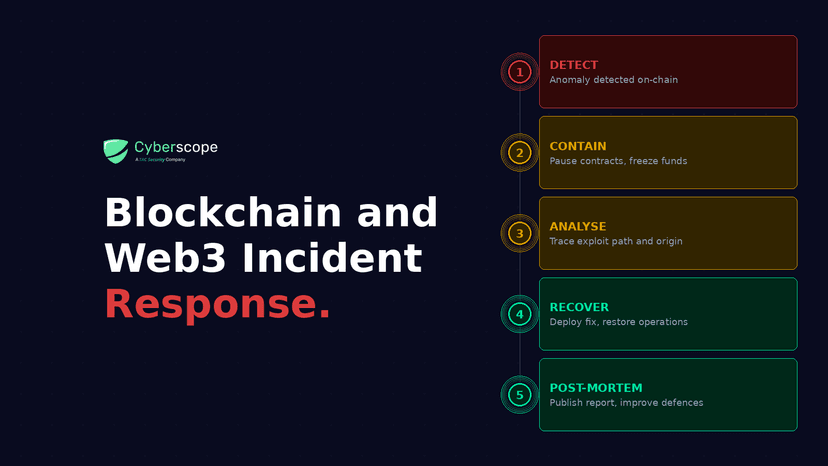
Blockchain and Web3 Incident Response
2 months ago